
WSET Level 3 winds are the part of climate study most candidates underrate, yet a named wind — the Mistral, the Cape Doctor, the Zonda — is often the single fact that explains why a region can ripen healthy grapes at all. This guide covers every country and region in the WSET Level 3 in Wines syllabus where wind is a quoted factor, gives you the named wind, the mechanism, and the style consequence you are expected to write down. Learn the four jobs wind does first, then the regional map, and you will be able to answer any "explain the influence of wind" question cold.
Keep the Syrah dossier and the Grenache dossier open as you read the Rhône and southern-France sections — they are the textbook varieties for wind-shaped viticulture.
The four jobs wind does (learn these first)
Almost every wind on the syllabus does one or more of these, and naming the job is what earns the mark.
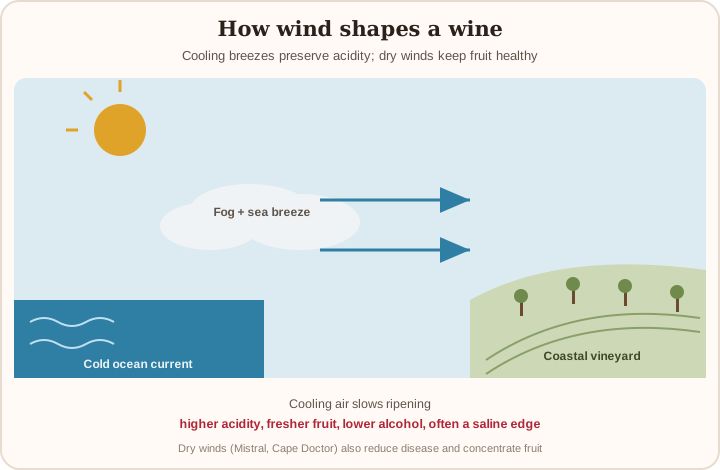
- Cooling. Cold or maritime winds lower vineyard temperature, slow ripening, and preserve acidity and aromatics — the reason cool sea breezes make a hot region viable for fresh, balanced wine.
- Drying / disease reduction. Strong dry winds evaporate surface moisture, keeping canopies and bunches dry and dramatically lowering fungal disease (mildew, botrytis rot) — a major quality benefit in damp climates and a reason for organic-friendly viticulture.
- Stress / damage. Excessively strong or hot winds shut down the vine's stomata, halt photosynthesis, can damage flowering and shoots, and reduce yields; they also force protective training and windbreaks.
- Moderating / continental swing. Winds (especially diurnal land–sea breezes and afternoon valley winds) widen or narrow the day–night temperature range, which shapes acidity retention and aromatic complexity.
A strong answer states the wind, the job, and the style: "The Mistral dries the southern Rhône canopy, reducing fungal disease and stressing vines toward lower yields and concentrated, healthy Grenache fruit."
France — Rhône Valley (the Mistral)
The Mistral is the most examinable wind on the entire syllabus. It is a cold, strong, dry north/north-westerly that funnels down the Rhône valley, accelerating as it is squeezed between the Massif Central and the Alps.
- Drying / disease: it keeps vineyards dry and notably free of fungal disease, a big quality asset in the southern Rhône.
- Cooling: it moderates summer heat and aids acidity retention.
- Stress / damage: it can be violent, so growers plant cypress and reed windbreaks, and in Châteauneuf-du-Pape historically bush-trained (gobelet) vines low to the ground; staking is used where the wind threatens to snap shoots. The galets-covered Châteauneuf vineyards also benefit because the stones hold heat against the wind's chill.
Exam shorthand: Mistral = cold, dry, strong N/NW wind → dries (less disease) + cools + can damage → windbreaks and low training.
France — Languedoc-Roussillon and the South
The Languedoc has its own family of dry winds with the same drying/disease benefit.
- Tramontane: a cold, dry north-westerly (the Languedoc-Roussillon equivalent of the Mistral) that dries the vineyards, reduces disease pressure, and helps make organic viticulture easier in this Mediterranean region.
- Cers and Marin: the Cers is a dry inland wind; the Marin is a humid, warmer wind off the Mediterranean that can raise disease risk — a useful contrast showing not all winds are beneficial.
France — Loire, Bordeaux, and Atlantic moderation
On the Atlantic coast the relevant "wind" is the moderating maritime airflow rather than a named gale.
- Bordeaux: the Atlantic and the Gironde estuary bring moderating maritime air; the pine forest of Les Landes to the west shelters the Médoc from the worst Atlantic storms. The maritime influence keeps the climate mild but damp, raising disease pressure that the gravel soils and canopy management offset.
- Loire: progressively less maritime and more continental as you move inland (Muscadet maritime → Sancerre continental), with Atlantic airflow moderating the western vineyards.
Italy — Alpine and lake winds
- Alto Adige: the Ora is a reliable afternoon breeze blowing north up the valley from Lake Garda; it cools the vineyards and creates a wide diurnal range that preserves the aromatics and acidity of the region's whites. Alpine valleys here also experience the warm, dry Föhn wind descending the mountains.
- Friuli: the Bora is a cold, gusty north-easterly off the Adriatic/Dinaric Alps; strong and drying, it keeps vineyards healthy but can be fierce.
- Sicily (Etna and the south): hot, dry Scirocco winds from North Africa can raise temperatures and stress vines, while altitude on Etna provides the counterbalance.
Spain — the Atlantic / Mediterranean split and Jerez
- Rías Baixas: wet Atlantic airflow brings humidity and disease pressure; growers train Albariño on raised pergolas specifically to improve air circulation and let drying breezes pass under the canopy.
- Jerez (Sherry) — the two named winds: this is a guaranteed exam contrast.
- The Poniente is a cool, humid westerly off the Atlantic. It moderates temperature, raises humidity, and is essential to keeping the flor yeast alive and the albariza soil's moisture topped up — a friend of quality. - The Levante is a hot, dry easterly from inland/Africa. It bakes and stresses the vines and the wine, dries the flor, and pushes ripeness — a more challenging wind that growers must manage.
Exam shorthand: Jerez Poniente = cool humid Atlantic westerly (feeds flor); Levante = hot dry easterly (stresses).
Greece — the Etesian / Meltemi winds
- Santorini and the Aegean: strong, persistent summer Etesian (Meltemi) winds sweep the islands. They are so fierce that growers train vines in a low basket (kouloura/stefani) so the bunches grow protected inside the woven crown, shielded from wind damage and sun scorch. This is the syllabus's headline example of wind dictating vine training. The wind also dries the vineyards and reduces disease in Assyrtiko.
Argentina — the Zonda
- Mendoza, San Juan, and Salta: the Zonda is a hot, dry föhn-type wind that descends the eastern slopes of the Andes, warming and drying as it falls. It is most dangerous in spring, when it can desiccate young shoots and disrupt flowering and fruit set, reducing the crop. Its drying effect does keep disease low, but examiners remember the Zonda primarily as a hazard to yields. It contrasts with the cooling effect of high altitude on Malbec.
Exam shorthand: Zonda = hot, dry, descending Andean wind → spring danger to flowering/yields.
Chile — the Pacific, the Humboldt, and afternoon breezes
Chile's quality cool-climate story is fundamentally a wind-and-current story.
- Casablanca, San Antonio/Leyda, Limarí: the cold Humboldt Current chills the Pacific air, and afternoon sea breezes plus morning fog (camanchaca) push inland through gaps in the Coastal Range, dramatically cooling these otherwise-warm latitudes and preserving acidity and aromatics in Sauvignon Blanc, Chardonnay, and cool-climate Pinot Noir.
- Central Valley: the Coastal Range blocks much of the sea breeze, so the inland valley floors are warmer and more reliant on Andean influence at night.
United States — fog and the gap winds
California's coolness in a warm state is driven by Pacific fog dragged in by wind through coastal gaps.
- Napa and Sonoma: cold Pacific air and fog are pulled inland through the San Pablo Bay / Petaluma Gap and the Russian River corridor each afternoon and evening, cooling the southern, lower vineyards (Carneros, Russian River) far more than the protected northern valley — the classic "cooler the closer to the fog" gradient.
- Petaluma Gap (Sonoma): a named AVA defined by its persistent wind and fog channel through the coastal hills, which slows ripening and thickens grape skins for structured Pinot Noir and Syrah.
- Santa Maria / Santa Ynez (Central Coast): transverse (east–west) valleys funnel cold ocean air directly inland, making these some of California's coolest sites.
South Africa — the Cape Doctor
- Coastal Western Cape (Stellenbosch, Cape Point, Constantia): the Cape Doctor is a strong, dry south-easterly that blows through the southern-hemisphere summer. It earns its name by "clearing" the vineyards of fungal disease and pests by drying the canopy, and it cools the vines. Like the Mistral and Tramontane, it can also stress vines and reduce yields if severe, and it favours sheltered aspects.
Exam shorthand: Cape Doctor = dry SE summer wind → dries (less disease) + cools, but can stress.
Australia and New Zealand — maritime cooling and wind exposure
- Australian coastal regions (Margaret River, Coonawarra, McLaren Vale, Tasmania): maritime breezes off the Southern and Indian Oceans moderate temperature and extend ripening; Margaret River's strong coastal winds also reduce disease and can require windbreaks.
- New Zealand (Marlborough's Awatere Valley): notably windier and cooler than the neighbouring Wairau, which slows ripening, thickens skins, and lifts the herbaceous, saline edge in its Sauvignon Blanc — a good "two-subregion wind contrast" example.
- Central Otago: sheltered by mountains from the prevailing westerlies, giving it a dry, continental, low-wind microclimate (the mountains do the work — see the mountains guide).
Germany and Austria — shelter over named winds
In the cool continental heart of Europe the exam point is usually about shelter from cold wind rather than a beneficial named wind: the Vosges, Haardt, and Taunus ranges block rain-bearing westerlies (covered in the mountains guide), and river valleys (Mosel, Rhine, Danube) funnel moderating air and reduce frost risk by keeping cold air moving rather than pooling.
How wind shows up in the glass: structure, fruit, and blind-tasting tells
Be honest about what wind does and does not do in a blind glass: wind rarely imprints a specific aroma, but it strongly shapes structure and the fruit-ripeness spectrum, which is exactly what you grade first. Translate it like this.
- Cooling winds, sea breezes, and fog (Humboldt/Pacific in coastal Chile and California, the Ora, maritime breezes) slow ripening. In the glass that means higher, fresher acidity, lower-to-moderate alcohol, lighter-to-medium body, and fruit that stays fresh/red or green rather than ripe/black — plus better-preserved aromatic lift (floral, herbal, the pronounced green-herbaceous edge of cool Sauvignon Blanc). Blind tell: high acid + restrained alcohol + vivid primary aromatics says a cool, wind/fog-moderated site even at a warm latitude.
- Persistent wind that thickens skins (Petaluma Gap, Marlborough's Awatere, Margaret River) makes smaller, thicker-skinned berries. That gives deeper colour, firmer tannin, and more concentration than the cool temperature alone would suggest — a cool-climate red with surprisingly deep colour and grip can be a wind-exposure clue, often with a saline twist on the finish.
- Strong drying winds (Mistral, Tramontane, Cape Doctor) keep fruit healthy and clean by suppressing rot and mildew, so the wine shows clean, unblemished fruit with no botrytis/rot taint, and the vine stress can lower yields toward greater concentration in Syrah- and Grenache-based reds.
- Hot or föhn winds (Zonda, Levante, Scirocco) push stress and ripeness and cut yields. The clearest stylistic consequence is in Sherry: the hot, dry *Levante dries the flor*, nudging styles toward a more oxidative, fuller character, while the cool, humid Poniente* keeps the flor alive for the freshest biological styles — a rare case where a named wind changes the wine type*, not just its structure.
The discipline: lead your wind answer with acid, body, and fruit ripeness (where it genuinely lands), add colour/tannin when skin-thickening wind is in play, and only reach for a named-aroma claim (saline maritime sites) as a soft confirmer, never the headline.
Quick-reference wind table
| Wind | Region(s) | Type | Main effect | Exam takeaway |
|---|---|---|---|---|
| Mistral | Rhône Valley | Cold, dry, strong N/NW | Dries (less disease) + cools + can damage | Windbreaks, low training |
| Tramontane | Languedoc-Roussillon | Cold, dry NW | Dries, reduces disease | Eases organic viticulture |
| Marin | Languedoc | Humid Mediterranean | Raises disease risk | Not all winds help |
| Ora | Alto Adige | Afternoon lake breeze | Cools, widens diurnal range | Preserves aromatics |
| Bora | Friuli | Cold, gusty NE | Dries but fierce | Healthy but harsh |
| Poniente | Jerez (Sherry) | Cool, humid Atlantic W | Feeds flor, moderates | Quality friend |
| Levante | Jerez (Sherry) | Hot, dry E | Stresses vine + flor | Quality challenge |
| Etesian / Meltemi | Santorini / Aegean | Strong dry summer | Dictates basket training | Wind drives vine shape |
| Zonda | Argentina (Mendoza/Salta) | Hot, dry föhn off Andes | Spring damage to flowering/yields | Remembered as a hazard |
| Humboldt sea breeze + fog | Coastal Chile | Cold Pacific airflow | Cools, preserves acidity | Cool-climate enabler |
| Petaluma Gap / Bay fog | Napa, Sonoma | Cold Pacific fog wind | Cools low/south sites | "Cooler near the fog" |
| Cape Doctor | Western Cape (SA) | Dry SE summer | Dries (less disease) + cools | Can also stress |
Frequently asked questions
What is the Mistral and how does it affect wine?
The Mistral is a cold, strong, dry north/north-westerly that funnels down the Rhône valley. It dries the canopy (reducing fungal disease), cools the vines and preserves acidity, but can be violent, so growers use cypress windbreaks and low training.
How does wind affect wine?
Wind cools (preserving acidity), dries (reducing disease), stresses vines (lowering yields and raising concentration) and can thicken skins (deeper colour, firmer tannin). It rarely adds a specific aroma of its own.
What is the Cape Doctor?
A strong, dry south-easterly that blows across South Africa's Western Cape through summer, "clearing" the vineyards of fungal disease by drying the canopy while cooling the vines.
Why are Santorini vines grown in baskets?
The fierce summer Etesian (Meltemi) winds force growers to train vines in a low basket shape (kouloura) so the bunches grow protected inside the woven crown, shielded from wind damage and sun scorch.
What is the Zonda wind?
A hot, dry föhn-type wind that descends the Andes in Argentina. It is most dangerous in spring, when it can desiccate young shoots and disrupt flowering and fruit set, reducing the crop.
How to lock winds into memory
Winds stick when you pair the name with the job and the grape it serves. Test yourself the active way: name a region out loud, then state its wind, the job, and the style effect before you check. The Compare grapes surface is handy here — line up a Mistral-shaped southern-Rhône Grenache against a Cape-Doctor-shaped South African Syrah and articulate why the wind matters in each. Then run the recall against the clock on the Train surface so the wind-to-style chain holds up under exam pressure.
This article is the air-movement part of terroir; pair it with the ground beneath the vine in WSET Level 3 soils: every region's vineyard ground, the elevation that often creates these winds in WSET Level 3 mountains: altitude, rain shadow and aspect, and the water bodies that drive the sea breezes in WSET Level 3 bodies of water: rivers, seas and lakes. The full terroir block fits into the revision calendar in How to study for WSET Level 3 in 60 days.
Further reading: for wider background on climate and viticulture, see the reference wine writing of Master of Wine Jancis Robinson.
Make the winds automatic. Recall each region's wind and its job under time pressure in Sensium's Train mode, and compare the wind-shaped styles side by side in Compare.