
WSET Level 3 mountains do far more than sit in the background of a region map — they create rain shadows that make whole countries' viticulture possible, lift vineyards into cooler air, and angle slopes toward the sun, and examiners expect you to explain exactly how. This guide covers every country and region in the WSET Level 3 in Wines syllabus where mountains or significant elevation are a quoted factor, giving you the range, the mechanism, and the style consequence. Master the four jobs mountains do, then the regional map, and any "explain the influence of altitude / the mountains" question becomes routine.
Keep the Malbec dossier and the Riesling dossier open — Andean-altitude Malbec and steep-slope Riesling are the textbook varieties for mountain viticulture.
The four jobs mountains do (learn these first)
Every mountain fact on the syllabus reduces to one of these levers, and naming the lever earns the mark.
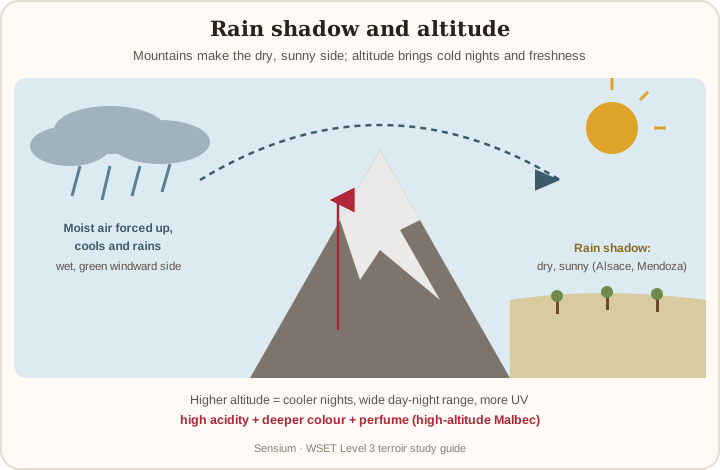
- Rain shadow. A mountain range forces moist air up, where it cools and drops its rain on the windward side, leaving the leeward side dry and sunny. This is what makes Alsace, Mendoza, and Central Otago viable.
- Altitude cooling + diurnal range. Temperature falls roughly 0.6 °C per 100 m, so high vineyards stay cooler and — crucially — have cold nights, giving a wide diurnal range that preserves acidity and aromatics and slows ripening, even at hot, sunny latitudes.
- Aspect (slope orientation). In cool climates, south-facing slopes (in the northern hemisphere) catch more direct sun and ripen marginal grapes; slope angle improves drainage and sun interception.
- Shelter and air movement. Ranges block cold winds and rain-bearing fronts, while slopes let cold air drain downhill at night (reducing frost) and channel valley winds.
A strong answer states the range, the job, and the style: "The Andes cast a rain shadow over Mendoza, giving a dry, sunny, disease-free climate, while altitude provides cold nights that keep freshness in concentrated Malbec."
South America — the Andes (the headline range)
The Andes are the most examinable mountains on the syllabus because they shape two whole countries differently.
- Argentina (Mendoza, Uco Valley, Salta): the Andes block Pacific moisture, so Mendoza is a high-altitude desert — viticulture depends on meltwater irrigation from the snowpack. Altitude is the quality lever: the Uco Valley climbs to ~1,000–1,500 m and Salta's Cafayate to ~1,700–3,000 m, giving intense sunlight/UV (thicker skins, deeper colour) but cold nights that retain acidity in Malbec and aromatic Torrontés. The descending Zonda wind is an Andean by-product.
- Chile: the Andes to the east and the Coastal Range to the west sandwich the Central Valley. Cold air drains down off the Andes at night, widening the diurnal range, while the Coastal Range partly blocks the cooling Pacific breeze (so where the range dips, cool air floods in). Andean foothill sites give structured, fresh Cabernet Sauvignon.
Exam shorthand: Andes = rain shadow (desert + irrigation) + altitude (cold nights, UV) → fresh, concentrated, high-colour wine.
France — Vosges, Alps, and the slope regions
- Alsace (Vosges Mountains): the Vosges sit to the west and create a textbook rain shadow, making Alsace one of the driest, sunniest regions of France — the reason it ripens Riesling, Gewürztraminer, and Pinot Gris so fully despite its northerly latitude. The best Grands Crus sit on south- and southeast-facing lower Vosges slopes for maximum sun.
- Northern Rhône (Hermitage, Côte-Rôtie): steep granite hillsides where aspect and slope are everything — south-facing terraces maximise sun interception for Syrah in a marginal-for-reds northern site.
- Savoie and Jura: Alpine and pre-Alpine slopes give cool, high, aspect-driven viticulture for light, fresh styles.
- Beaujolais / Mâconnais: rolling granite and limestone slopes where aspect tilts the better crus toward the sun.
Germany and Central Europe — shelter and steep slopes
In cool, continental Europe mountains mostly provide shelter and slope aspect rather than altitude.
- Germany (Rheingau, Pfalz, Mosel): the Taunus hills shelter the Rheingau and the Haardt mountains (the northern end of the Vosges) shelter the Pfalz from rain-bearing westerlies, both creating drier, sunnier pockets. The Mosel's quality comes from impossibly steep south-facing slate slopes that angle the vines toward a weak northern sun — pure aspect viticulture.
- Austria (Wachau, Kamptal): steep terraced slopes above the Danube give aspect and drainage, with the Grüner Veltliner and Riesling sites benefiting from sun-facing terraces and cool air draining off the higher ground.
Spain — the sheltering sierras
- Rioja (Sierra de Cantabria / Sierra de la Demanda): the Sierra de Cantabria shelters Rioja Alta and Rioja Alavesa from the cold, wet Atlantic to the north, giving a moderate climate for structured Tempranillo; these subregions are also higher and cooler than the lower Rioja Oriental.
- Ribera del Duero: a high plateau (~750–850 m) where altitude delivers very cold nights and a huge diurnal range, retaining freshness in powerful reds despite hot days.
- Priorat: a rugged amphitheatre of steep slate (llicorella) hills; the slopes and altitude moderate the heat and the terraces force tiny yields.
- Sierra de Gredos (Central Spain): high-altitude granite slopes producing fresh, elegant old-vine Garnacha — a modern syllabus example of altitude rescuing a hot-country grape.
Italy — the Alps and the Apennines
- Piedmont (Barolo/Barbaresco): the Alps ring Piedmont to the north and west (the name means "foot of the mountains"), giving a continental climate with cold winters, and the autumn fog (nebbia) that drifts through the hills as late-ripening Nebbiolo finishes — the fog is named after the grape's harvest conditions. Slope aspect decides the best crus (south/southwest sites ripen Nebbiolo fully).
- Alto Adige / Valle d'Aosta: genuine Alpine altitude viticulture — high, steep, sun-facing terraces with a wide diurnal range for aromatic whites and light reds.
- Apennines (Tuscany, Abruzzo, the South): the central spine gives altitude and continentality to inland regions; Chianti Classico's hills (250–500 m+) give the diurnal range that keeps Sangiovese fresh, and Etna's volcanic slopes climb to 1,000 m for high-altitude reds and whites.
Greece, Cyprus, and the eastern Mediterranean
- Greece (mainland — Naoussa, Mantinia): mountain and high-plateau sites give the altitude that keeps Xinomavro and Moschofilero fresh in a hot country; Mantinia's high plateau is notably cool.
- Santorini: not mountainous, but the volcanic caldera and exposure matter more than elevation here (see the soils and winds guides).
- Cyprus (Troodos Mountains): vineyards climb the Troodos to 1,000 m+ to escape the coastal heat — altitude is the entire quality story for the island's reds and for Commandaria.
United States — the coast ranges and mountain AVAs
- California (Mayacamas, Vaca, Santa Cruz, Santa Lucia): the Coast Ranges create the valleys and — critically — the gaps that let cooling Pacific fog in (covered in the winds guide). Mountain AVAs sit above the fog line: Howell Mountain, Mount Veeder, Spring Mountain, and the Santa Cruz Mountains get more even daytime sun (no fog) but cooler air at elevation, giving structured, age-worthy Cabernet Sauvignon distinct from the warmer valley floor.
- Santa Lucia Highlands (Central Coast): an elevated, east-facing bench above the Salinas Valley, cooled by altitude and the valley's wind tunnel, for Pinot Noir and Chardonnay.
Argentina vs Chile recap, plus the New World mountain regions
- Australia (Adelaide Hills, Eden Valley, Great Dividing Range): the Mount Lofty Ranges lift the Adelaide Hills and Eden Valley to cool, high sites for Chardonnay, Riesling, and sparkling base, a cool island in warm South Australia. The Great Dividing Range shapes the cooler high-country regions of Victoria and NSW (e.g. the high Canberra District, Orange, and the alpine Beechworth).
- New Zealand (Southern Alps): the Southern Alps cast a rain shadow that gives Marlborough's Wairau Valley its dry, sunny growing season, and they hem in Central Otago to make it New Zealand's only continental, mountain-ringed region — dry, with hot days, very cold nights, and a wide diurnal range for perfumed, structured Pinot Noir.
- South Africa (Cape Fold Mountains, Drakensberg foothills): the Cape Fold ranges around Stellenbosch and Franschhoek provide altitude and aspect — cooler, higher mountain slopes (e.g. Helderberg, Banghoek) and varied aspects let growers chase freshness, while the mountains also funnel and shelter from the Cape Doctor.
Canada and cool-climate North America
- Okanagan Valley (BC): a long, deep glacial valley flanked by mountains; aspect and the moderating lake matter more than altitude, with steep benches angled to the sun in a near-desert rain-shadow climate.
- Niagara (Escarpment): the Niagara Escarpment is a low ridge (not a true mountain) whose slope channels air circulation off Lake Ontario, reducing frost and aiding ripening — a good "minor relief, major effect" example.
How mountains show up in the glass: structure, aroma, and blind-tasting tells
Mountains earn marks in a tasting paper because altitude, rain shadow, and aspect leave a clear fingerprint on acid, colour, tannin, alcohol, fruit ripeness, and aromatic intensity — often a distinctive combination that is itself the tell.
- Altitude (cooling + wide diurnal range) is the most distinctive signature. Cold nights preserve high, fresh acidity and lift aromatic intensity (more floral/perfumed character), while sunny days still ripen the fruit. The classic blind tell is a wine that is simultaneously ripe/concentrated AND high-acid with vivid perfume — high-altitude Malbec is the model: deep colour and ripe black fruit, yet fresh acidity and a floral violet lift.
- Intense UV at altitude thickens skins, raising anthocyanins and tannin, so high-elevation reds show deeper colour and firmer structure than a low-altitude wine of the same ripeness. Blind tell: saturated colour + ripe-but-grippy tannin + freshness = altitude.
- Rain shadow (Vosges, Andes, Southern Alps) gives dry, sunny, healthy ripening. Expect riper fruit, fuller body, clean disease-free expression, and reliable, sometimes generous alcohol — think the full, ripe-fruited dryness of Alsace Riesling or the sunny concentration of Mendoza.
- Aspect (a warm, sun-facing slope) ripens marginal sites, so a wine showing fuller ripeness than its cool latitude would predict — Mosel Riesling reaching real fruit weight, Northern Rhône Syrah ripening with its black-pepper signature — points to favourable slope exposure.
- Continentality from mountain-ringed valleys (Piedmont, Central Otago) widens the seasonal and diurnal swing. Piedmont's autumn fog lets Nebbiolo hang to its hallmark blind profile — pale garnet colour, very high acid, very high tannin, and a perfumed tar-and-roses nose — the purest example of mountains shaping a recognisable style.
The discipline mirrors the soil and wind chapters: call the structure first (high acid + firm tannin + deep colour + ripe fruit is the altitude composite), then use aromatic intensity and freshness as the confirming layer. Aroma at altitude is about lift and preservation more than any unique scent, so deploy "perfumed/floral" as support, not as the whole answer.
Quick-reference mountain table
| Range / relief | Region(s) | Main job | Style consequence |
|---|---|---|---|
| Andes | Mendoza, Salta (Arg); Central Valley (Chile) | Rain shadow + altitude + cold-air drainage | Dry/irrigated; fresh, deep, concentrated Malbec |
| Vosges | Alsace | Rain shadow | Dry, sunny → ripe Riesling/Gewürztraminer |
| Taunus / Haardt | Rheingau / Pfalz (Germany) | Shelter from westerlies | Drier, sunnier, riper |
| Sierra de Cantabria | Rioja Alta/Alavesa | Shelter from Atlantic + altitude | Moderate, structured Tempranillo |
| Alps | Piedmont; Alto Adige | Continentality + fog + altitude/aspect | Cold winters, fog for Nebbiolo; fresh Alpine whites |
| Apennines | Tuscany, Abruzzo, Etna | Altitude + continentality | Diurnal range keeps Sangiovese fresh |
| Troodos | Cyprus | Altitude (escape coastal heat) | Cool, fresh reds + Commandaria |
| Coast Ranges (gaps) | Napa, Sonoma | Create valleys + fog gaps | "Cooler near the gaps" |
| Mountain AVAs (above fog) | Howell Mtn, Mt Veeder, Santa Cruz | Altitude above fog line | Structured, age-worthy Cabernet |
| Mount Lofty Ranges | Adelaide Hills, Eden Valley | Altitude cooling | Cool-climate Chardonnay/Riesling |
| Southern Alps | Marlborough; Central Otago | Rain shadow + continentality | Dry season; perfumed Pinot Noir |
| Cape Fold Mountains | Stellenbosch, Franschhoek | Altitude + aspect + shelter | Fresher, site-specific reds |
Frequently asked questions
What is a rain shadow in wine?
It is the dry, sunny zone on the leeward side of a mountain range: moist air is forced up the windward side, cools and drops its rain there, leaving the far side dry. This is what makes Alsace, Mendoza and Central Otago viable.
How does altitude affect wine?
Higher vineyards are cooler and have cold nights and a wide diurnal range, so the wines keep high, fresh acidity and aromatic lift while sunny days still ripen the fruit — classically high-altitude Malbec: deep colour and ripe fruit yet fresh and floral.
Why is Mendoza good for wine?
The Andes give it a dry, sunny, disease-free rain-shadow desert (irrigated by Andean snowmelt) plus altitude's cold nights, producing fresh, concentrated, deeply coloured Malbec.
What does aspect mean in viticulture?
Aspect is the direction a slope faces. In cool climates a sun-facing slope (south in the northern hemisphere) catches more direct sun and ripens marginal grapes, as on the Mosel's steep slate slopes.
Which mountains create Alsace's dry climate?
The Vosges, to the west of Alsace, cast a rain shadow that makes it one of the driest, sunniest regions of France, ripening Riesling, Gewürztraminer and Pinot Gris despite the northerly latitude.
How to lock mountains into memory
Mountain facts stick when you attach each range to its job and the grape it enables. Drill them the active way: name a region, then say the range, the job (rain shadow / altitude / aspect / shelter), and the style before you check. The Compare grapes surface makes the contrasts vivid — put high-altitude Mendoza Malbec next to a cool, rain-shadowed Central Otago Pinot Noir and articulate which mountain job is doing the work in each. Then run the recall under the clock on the Train surface.
This is the elevation part of terroir; pair it with the ground in WSET Level 3 soils: every region's vineyard ground, the air in WSET Level 3 winds: how air shapes every wine region, and the water in WSET Level 3 bodies of water: rivers, seas and lakes — mountains often create the soils (erosion), the winds (föhn, channelling), and even the rivers (meltwater). The whole terroir block slots into the revision plan in How to study for WSET Level 3 in 60 days.
Further reading: for wider background on altitude and terroir, see the reference wine writing of Master of Wine Jancis Robinson.
Make the mountains automatic. Recall each region's range and its job under time pressure in Sensium's Train mode, and compare the altitude- and rain-shadow-shaped styles side by side in Compare.